If you've been online since Sunday, you've probably seen it. A Learjet 60 crashed in Palm Beach County, Florida on 1 November, and nine people lost their lives. The crew had reported ice and moderate turbulence shortly before.
First, my thoughts are with the families. Behind every headline are people who won't come home.
Since then, many of you have written something like: "So turbulence IS dangerous. Everyone told me it couldn't bring a plane down." I understand why that hits hard. So let me talk to you the way I would if you were sitting on my jump seat. I'm a working airline captain, flying the A320 today.
What we actually know, and what we don't
Here is what has been publicly reported. The jet was cruising at about 35,000 feet. The crew reported light ice that was "manageable" and moderate turbulence, then asked to climb. Shortly afterwards there was a mayday and a rapid descent. The NTSB has said weather is a major focus of its investigation. (>Aviation Week, >AP)
What we don't know is why it happened. There is no probable cause yet. Accident investigations take a year or more because investigators look at everything: the weather, the aircraft, its maintenance, the crew, and how all of those interacted. Accidents almost never have one simple cause.
So I won't guess, and I'd ask you to be gentle with yourself about anyone online who claims to know. "The crew reported turbulence" is not the same as "turbulence caused the crash."
A business jet is not an airliner
This is the part most headlines skip. A Learjet 60 is a small business jet that carries a handful of passengers. The aircraft you board for your holiday is a different machine, flown inside a different system:
- Size and design. Airliners are much larger and heavier, and they are designed and certified to the transport-category standards used for scheduled passenger flying, with large structural margins.
- The operating system around the flight. At an airline, every flight has a dispatcher or flight-operations team watching the weather with us, company procedures for storms and icing, simulator checks every six months, and line checks on top. Many business-jet operations have far fewer of those layers.
- The track record. Large commercial airliners remain one of the safest ways humans have ever travelled. That record was built precisely because the industry learns from every accident, including ones like this.
None of this is a criticism of business aviation. It's simply why one tragedy in a small jet doesn't tell you anything new about the risk on your airline flight.
How we handle storms
On the flight deck, thunderstorms are the one weather feature we treat with deep respect, and we simply don't fly through them. Here's what that looks like on my flights:
- Before departure we study significant-weather charts and forecasts for the whole route.
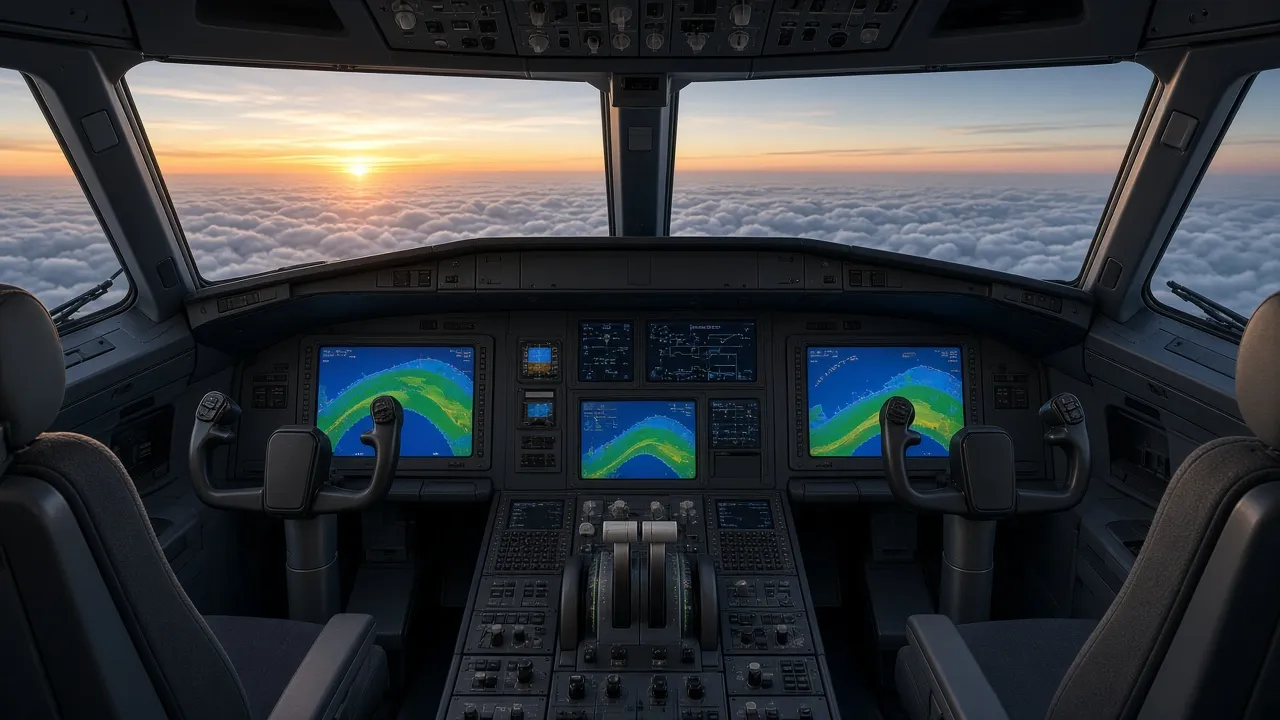
- In flight our weather radar shows the storm cells ahead, and we ask air traffic control to deviate around them, often by 20 miles or more. Sometimes we go around a line of storms that adds half an hour to the flight. Nobody on the flight deck minds.
- We share information. Pilots report bumpy air to each other and to ATC, so the aircraft behind us can avoid it.
I explain this in more detail in what pilots do during a storm.
Icing: what protects your aircraft
Ice is a big part of the conversation this week, so here is the simple version. Airliners have ice-protection systems that are used routinely: hot air from the engines heats the wing leading edges and engine intakes, and the probes that feed our instruments are electrically heated. We switch these on according to clear procedures whenever conditions call for it, and we're trained to recognise and avoid icing that is beyond normal.
On the ground, if there is snow or frost, the aircraft is de-iced before take-off. See flying in snow and de-icing, explained.
The seatbelt is still your best friend
For passengers on airliners, the real injury risk in turbulence comes from not being strapped in. Last week's Volaris flight in Mexico hit clear-air turbulence and some people were hurt, yet the aircraft carried on and landed normally. That pattern is almost always the same: the aircraft is fine, and people who weren't belted in get hurt.
So keep it fastened, loosely, whenever you're seated. It turns turbulence back into what it is for you: uncomfortable, not dangerous. More on this in is turbulence dangerous?
Please go easy on the audio and videos
The air traffic control audio from this accident is being shared widely. I gently suggest you don't listen to it. It's real people in their worst moments. It won't teach you anything about your own flight, and for an anxious mind it can replay for weeks. Many pilots are saying the same thing.
If the news is stirring up your anxiety, it's fine to mute the topic for a few days. That isn't avoidance. It's looking after yourself. You might find sudden fear of flying and breathing techniques for flying anxiety helpful this week.
If you're flying soon
- It's completely normal to feel more anxious after a crash in the news.
- Your crew will brief the weather, avoid storms and turn on ice protection as normal. That's their everyday job, not an exception.
- Keep your seatbelt on whenever you're seated.
- If you feel like cancelling, give yourself a day before deciding. The feeling often softens once the headlines move on.
The captain's bottom line
A tragic accident in a small business jet, with its cause still unknown, does not mean your airline flight is in danger from turbulence. We avoid storms, the aircraft is protected against ice, and your seatbelt removes the main risk. I'll be at work this week like every week, and I'd be happy to have you on board.
Want this in your pocket?
Download my free illustrated PDF, Turbulence & Aircraft Sounds Explained by an Airline Captain, and take it on your next flight.
Get the free guideFrequently asked questions
Did turbulence cause the Learjet crash in Florida?
Nobody knows yet. The NTSB is investigating and has not published a probable cause. Weather is one area it is looking at, but final reports usually take a year or more. Please be wary of anyone who claims to know the answer now.
Is a business jet the same as an airliner?
No. Business jets are certified and operated differently from airliners. They are smaller and lighter, often fly with fewer layers of company oversight, and many operate under different rules from scheduled airlines. That doesn't make them unsafe, but airline flying has far more redundancy built around it.
Should I cancel my flight because of the crash?
That is your choice, and I respect it. But nothing about this accident changes the risk on your airline flight. Your crew will avoid storms, the aircraft is protected against icing, and if you keep your seatbelt fastened you remove the main risk turbulence carries for passengers.
Should I listen to the cockpit audio?
I gently suggest you don't. It is real people in their final moments, it teaches you nothing about your own flight, and for an anxious mind it can stick around for weeks.
This article is general information, not medical or professional advice. Always follow instructions from your crew. If fear of flying seriously affects your life, please speak to a doctor or qualified therapist.