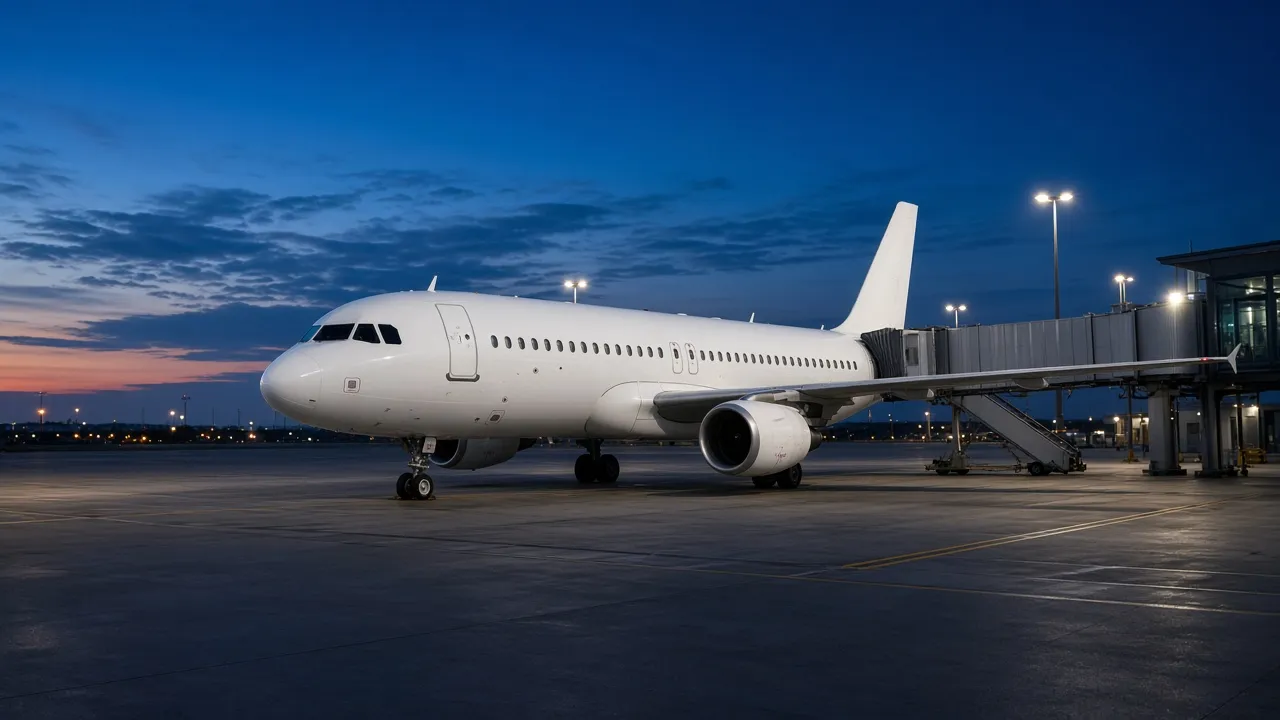
Looking out of the terminal window at dark clouds and rain, many nervous flyers wonder, "Are they really going to fly in this?" It's a fair question. So let me explain what happens behind the scenes when weather turns stormy, and why your pilots are probably the calmest people in the airport about it.
The key principle: we don't fly through thunderstorms
Rain, cloud, wind and even snow are things airliners handle every day. Thunderstorms are different. Inside a mature thunderstorm cell there can be strong up- and downdrafts, heavy turbulence, hail and lightning. So pilots don't fly through them. We go around them, over them when we can safely do so with a big margin, or we wait for them to pass.
The US Federal Aviation Administration's guidance on thunderstorms recommends avoiding severe thunderstorms by at least 20 nautical miles. You can read more in the FAA's >Aviation Weather Handbook. Airlines build similar margins into their procedures.
Before departure: planning around the weather
When storms are forecast, planning starts hours before the flight:
- Weather forecasts and charts show where storms are expected and how high they reach.
- Extra fuel. If storms might mean holding, rerouting or diverting, we carry extra fuel so we have plenty of options.
- Alternate airports. We always have at least one alternate destination planned in case the weather at our destination doesn't improve.
- Route planning. Dispatchers and pilots may choose a route that avoids the worst areas from the start.
If a storm is directly over the airport, departures may pause. This can be frustrating, but it's the system working exactly as it should: nobody takes off into a thunderstorm.
On the ground: lightning and ramp safety
When lightning is close to an airport, ground crews are often brought indoors for their own safety, which can pause baggage loading and refuelling. If your flight is delayed "due to lightning in the area," that's what's happening. The aircraft itself isn't at risk; it's about protecting people working outside.
In the air: weather radar and teamwork
Once airborne, we use our onboard weather radar, which shows rain intensity ahead of the aircraft in colours, from green for light to red or magenta for very heavy. Heavy precipitation is a good indicator of a storm cell's core. We tilt the radar up and down to understand the storm's shape and height.
We work with air traffic control, who can see weather on their own displays and coordinate deviations so aircraft can safely route around storms. On busy stormy evenings, you'll hear pilot after pilot on the radio asking for headings to avoid weather. It's routine.
We also use reports from other aircraft and, increasingly, live weather data uploaded to the flight deck.
What you'll notice in the cabin
- Turns. The aircraft may make gentle turns as we deviate around storms.
- Seatbelt sign on. Flying near (not through) storms can be bumpy, so we'll keep you seated. Read how pilots handle turbulence.
- Flashes outside. At night, you might see lightning in the distance lighting up clouds. From a safe distance, it can actually be beautiful.
- Rain on the windows and a louder rushing sound in heavy rain.
- Holding. If storms are over the destination, we may circle in a holding pattern until they move. Holding is planned for; we carry fuel for it.
- A diversion. Occasionally we'll land somewhere else and wait for the weather to clear. It's inconvenient, but it's good airmanship.
What if lightning hits the aircraft?
Lightning strikes on airliners are not unusual. Industry estimates suggest a typical airliner is struck roughly once a year, often while climbing or descending through cloud. Many passengers have been on a flight that was struck without ever knowing it.
Aircraft are designed for this. The outer skin is largely conductive, and the aircraft is built so that the electrical current flows around the outside and exits, usually from a wingtip or tail. Sensitive systems are shielded, fuel tanks are designed to prevent sparks, and composite aircraft include conductive materials in their structure for the same reason. Modern aircraft are certified to meet strict lightning-protection standards.
If lightning strikes, you might see a bright flash and hear a loud bang. The flight usually continues normally. After landing, engineers inspect the aircraft for small marks where the strike entered and exited, which is a routine maintenance check.
Wind, crosswinds and go-arounds
Storms often bring strong or gusty winds. Pilots train extensively to land in crosswinds, and every aircraft has a maximum demonstrated crosswind. If the wind is too strong or gusty, or wind shear is reported near the runway, we'll wait, use a different runway, or divert.
Sometimes on approach, you'll feel the engines roar and the aircraft climb away instead of landing. This is a go-around. It's a normal, practised manoeuvre used whenever the approach isn't perfect, for example because of a gust or the runway not being clear. It's a sign of a careful crew, not a problem. We fly around and try again, or go somewhere else.
Wind shear: the one we respect
Wind shear is a sudden change in wind speed or direction. Near thunderstorms, it can be strong close to the ground. Modern airports and aircraft have wind shear detection systems, and pilots train specifically for wind shear escape manoeuvres in simulators. If wind shear is reported, we'll delay the approach or take-off until it's clear.
Snow, ice and fog
Not all storms are thunderstorms. In winter, aircraft are de-iced before departure, which you may see as orange or green fluid sprayed onto the wings. Engines and wings have anti-ice systems in flight. In fog, many airports and aircraft are equipped for low-visibility landings using precise guidance systems, and pilots are specially trained and certified for them.
Why pilots are calm about weather
In more than twenty years of flying, from turboprops to widebody jets, I've flown through tropical storm seasons, winter fronts and monsoon rains. Weather is just part of the job. It's something we plan around, discuss, and manage with fuel, alternates, radar and teamwork. The rule is simple: if in doubt, don't. Wait, go around it, or go somewhere else.
Tips for nervous flyers on a stormy day
- Check the airline app, not the sky. Delays mean the system is being careful.
- Expect some bumps and keep your belt fastened.
- Sit over the wing for the smoothest ride. See best seats for nervous flyers.
- Breathe. Try the techniques in breathing exercises for flying anxiety.
- Reframe the delay. Every minute you wait is a minute pilots and controllers are choosing the safest path.
The captain's bottom line
Pilots don't fly through thunderstorms. We plan around them on the ground, steer around them in the air, and wait them out when needed. Lightning is designed for. Wind and rain are routine. When weather gets serious, the system slows down on purpose. That's what makes flying safe, even on a stormy day.
Want this in your pocket?
Download my free illustrated PDF, Turbulence & Aircraft Sounds Explained by an Airline Captain, and take it on your next flight.
Get the free guideFrequently asked questions
Do planes fly through thunderstorms?
No. Pilots avoid flying through thunderstorm cells, typically by about 20 nautical miles at cruise, using forecasts, onboard weather radar and air traffic control assistance.
What happens if lightning hits a plane?
Airliners are designed to conduct lightning around the outside of the aircraft and away. Strikes are not unusual and passengers typically notice only a flash and a bang. The aircraft is usually inspected after landing.
Will my flight be cancelled because of a storm?
Sometimes flights are delayed, rerouted or held while storms pass. That is the system being cautious, which is exactly what you want.
This article is general information, not medical or professional advice. Always follow instructions from your crew. If fear of flying seriously affects your life, please speak to a doctor or qualified therapist.