In the last month alone, at least four or five new fear-of-flying apps have appeared. Turbulence forecasts, sound explainers, "pocket captains". Some of them are genuinely helpful, and if one helps you, please keep using it.
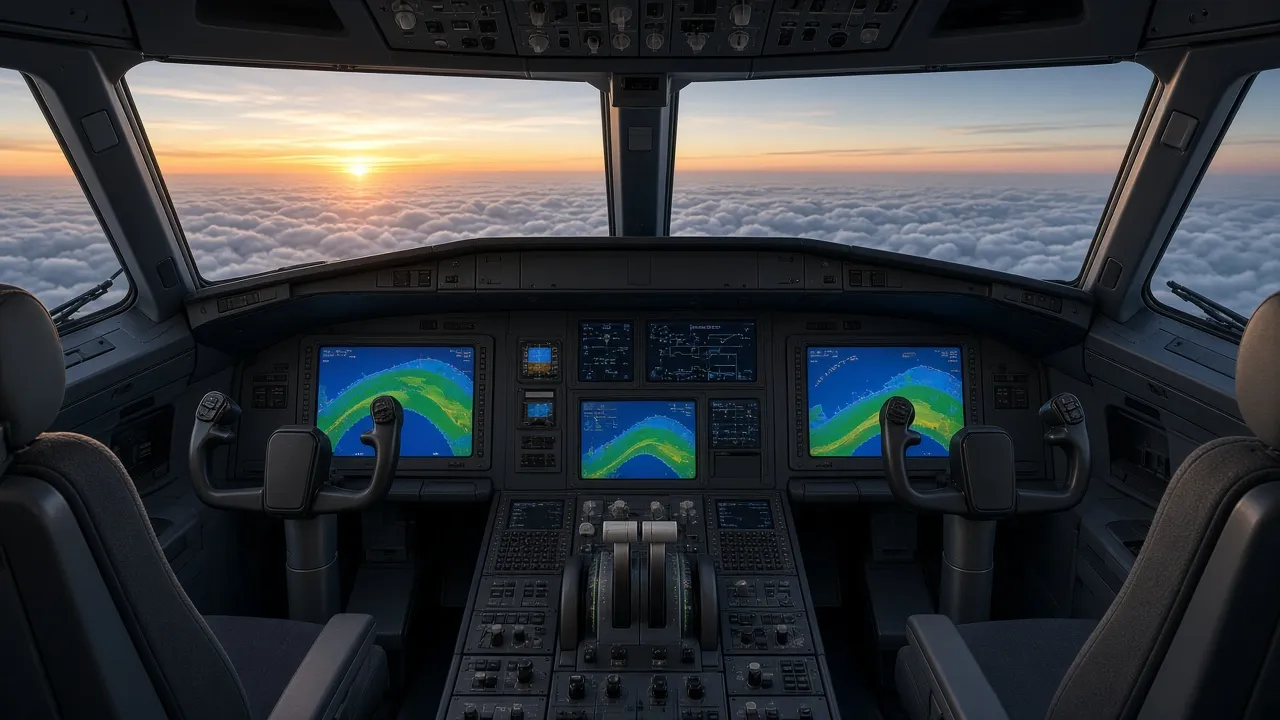
But I want to show you something an app can't: what actually happens on the flight deck when the ride gets bumpy. I'm a working A320 captain, and this is my real routine.
Before we even leave the gate
My first officer and I brief the weather for the whole route: significant-weather charts, forecast turbulence, jet streams and storm areas. We talk through where it might be bumpy and plan for it. Sometimes we pick a different cruising level or ask the cabin crew to do the service early so they're seated before a known patch.
An app can show you the same forecast. What it can't show is the plan the crew has already built around it.
When the first bumps arrive
Here's what happens, usually within a few seconds:
- Seatbelt sign on. Often with a short announcement from me, so you know we've seen it.
- A quick check of the picture. Radar for any build-ups, reports from aircraft ahead, and what air traffic control is hearing.
- Speed and autopilot. The autopilot usually stays on and handles the bumps smoothly. If needed, we fly the recommended turbulence speed, which gives the wing the best margin.
- Find smoother air. We ask ATC for a different level or a small route change. Pilots share ride reports all day, so we usually know where the smooth air is.
- Look after the cabin. If it's more than light chop, I'll ask the cabin crew to sit down too. That's about their safety, not a sign of danger.
None of this feels dramatic to us. It's ordinary, like a driver slowing down on a gravel road. More in how pilots handle turbulence.
What a real captain knows that an app doesn't
- Live information. Our radar and the reports from aircraft just ahead of us are more current than any forecast on your phone.
- Judgement. We decide in real time whether to climb, descend, slow down or go around weather, and we've practised it for years.
- Context. When the news is full of a frightening story, an app can't tell you how that event relates to your flight. A pilot can explain the difference, like I did in what the Florida Learjet crash means for your flight.
- Accountability. The person making the decisions on your flight is sitting at the front, strapped in, flying home to their own family that night.
How to use an app well
If you like apps, here's how I'd use one:
- Treat a turbulence forecast as a heads-up, not a promise. A forecast of "moderate" often turns out smoother because the crew avoids it.
- Use the sound guides to learn what's normal, then practise less checking during the flight. Constant checking can feed anxiety.
- Pair it with a skill you carry with you: breathing techniques for flying anxiety work even in airplane mode.
The one thing no app can do for you
Fasten your seatbelt whenever you're seated. That single habit removes the main risk turbulence carries for passengers. An app can remind you. Only you can click it.
The captain's bottom line
Apps can inform you. Your crew is the one actually flying through the sky you're worried about, with live information, training and judgement. Next time it gets bumpy, picture what I described above happening calmly at the front. Because it is.
Want this in your pocket?
Download my free illustrated PDF, Turbulence & Aircraft Sounds Explained by an Airline Captain, and take it on your next flight.
Get the free guideFrequently asked questions
Are fear-of-flying apps useful?
Many are. Turbulence forecasts, sound explanations and breathing exercises can all help. Use whatever makes you calmer. Just know an app sees a forecast, not what your crew sees and decides in real time.
Can an app predict turbulence on my flight?
It can show a forecast for your route, which is a useful guide. But forecasts can't see everything, and your crew has live radar, reports from aircraft ahead and air traffic control, so they often avoid bumps an app predicted.
What does the captain do when it gets bumpy?
We check the reports and radar, turn on the seatbelt sign, slow to the recommended speed for rough air if needed, look for a smoother altitude or route, and make sure the cabin crew are seated when it matters.
This article is general information, not medical or professional advice. Always follow instructions from your crew. If fear of flying seriously affects your life, please speak to a doctor or qualified therapist.