Short answer: yes, most people feel turbulence more at the back of the aircraft. But it isn't more dangerous back there, and once you understand why, you can use it to pick a seat that makes your flight anxiety easier to manage.
Why the back moves more
Think of a seesaw. Sit in the middle and you barely move. Sit at the end and you go up and down a lot.
An aircraft in turbulence behaves in a similar way. Bumps don't only push the whole aircraft up or down; they also make it pitch nose-up and nose-down slightly around its balance point, the centre of gravity, which is roughly over the wings. The further you sit from that point, the more of that rocking you feel. The tail is a long way from it, so the back rows feel the most. The tail also sits in air that has already flowed over the wings and fuselage, which can add a little extra motion.
The front of the cabin is also some distance from the centre of gravity, but it usually feels smoother than the back.
The smoothest seats
For a nervous flyer, the best seats for turbulence are usually:
- Over the wings. You're closest to the centre of gravity and the wing roots, so you feel the least pitching. Many people also find it reassuring to see the wing.
- Towards the front. Smoother than the back, quieter on many aircraft, and you get off sooner.
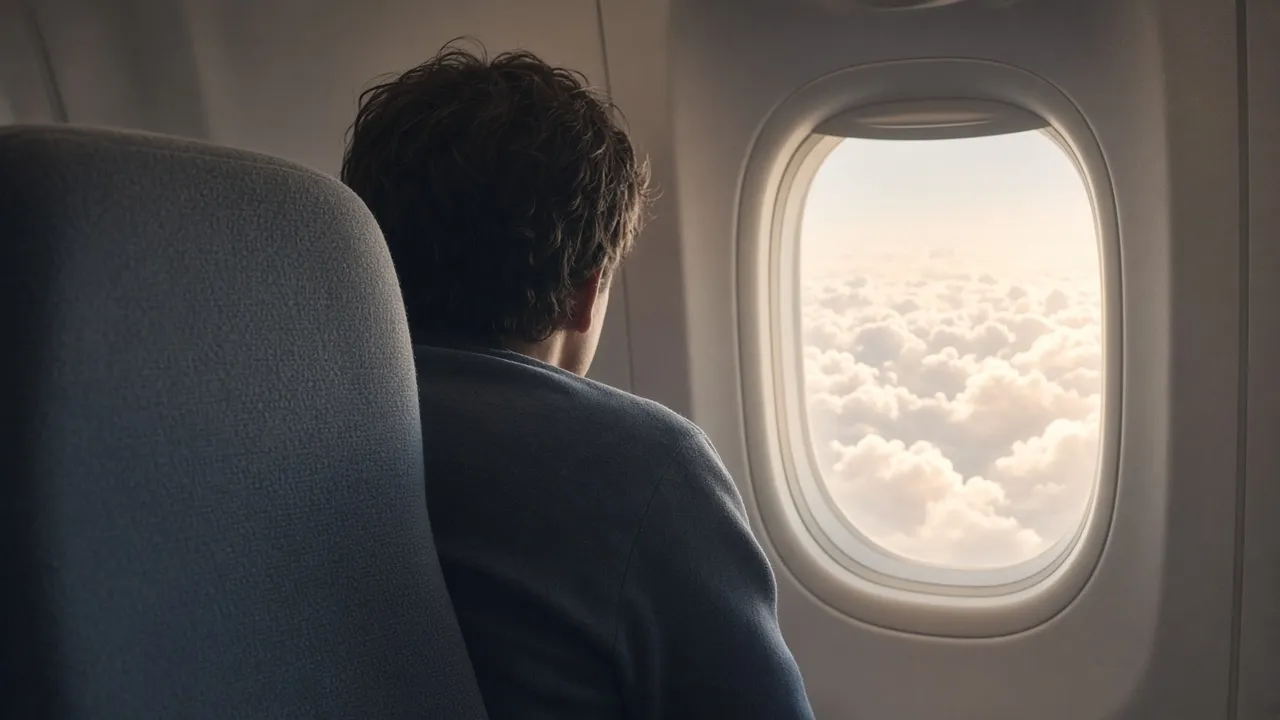
- An aisle seat if you feel closed in, or a window if seeing the horizon helps your stomach. Seeing a steady horizon can make movement feel less dramatic.
I go through all the options, including what to choose for claustrophobia and motion sickness, in the best seats for nervous flyers.
Different, not more dangerous
Every part of the aircraft is flying through the same air at the same time. The structure is designed and tested to handle loads well beyond anything it meets in everyday turbulence. Sitting at the back changes how the ride feels to you, not how safe it is.
A bump that feels like a big drop at the back is usually just a bit of altitude lost for the aircraft as a whole. If that sinking feeling is your main trigger, read why does the plane suddenly drop?.
Is turbulence worse on smaller aircraft?
Smaller, lighter aircraft can feel bumps more sharply, just as a small boat rocks more than a big ferry on the same water. Narrowbody jets like the A320 family usually ride a little more firmly than large widebody aircraft. That is comfort, not safety. If you fly an A320, my A320 sounds and sensations guide explains everything you'll hear and feel, gate to gate.
If you're already at the back
Plenty of us end up in the last few rows. A few things help:
- Keep your belt fastened whenever you're seated, even with the sign off.
- Look forward and out, at the horizon if you can, or at a fixed point in the cabin.
- Breathe slowly: in gently for a count of five, out for a count of five.
- Keep a little food in your stomach and a drink of water nearby if you get queasy.
The captain's bottom line
The back of the aircraft does feel turbulence more, because it sits further from the aircraft's balance point. It is not less safe. If smooth matters to you, choose a seat over the wings or towards the front, keep your belt on, and remember: what feels like a big movement is usually a small one.
Want a printable guide to turbulence and every normal sound? Get my free guide.
Want this in your pocket?
Download my free illustrated PDF, Turbulence & Aircraft Sounds Explained by an Airline Captain, and take it on your next flight.
Get the free guideFrequently asked questions
Which seat feels the least turbulence?
Seats over the wings, close to the aircraft's centre of gravity, usually feel the smoothest. Seats near the front come next. The rear rows tend to feel the most movement.
Is it more dangerous to sit at the back in turbulence?
No. The whole aircraft is moving through the same air, and the structure is designed for loads far beyond normal turbulence. The back simply feels the motion more. Keeping your seatbelt fastened matters far more than where you sit.
Is turbulence worse on smaller planes?
Smaller and lighter aircraft can feel bumps more sharply than large widebody jets, in the same way a small boat rocks more than a ferry. That is about comfort, not safety.
This article is general information, not medical or professional advice. Always follow instructions from your crew. If fear of flying seriously affects your life, please speak to a doctor or qualified therapist.