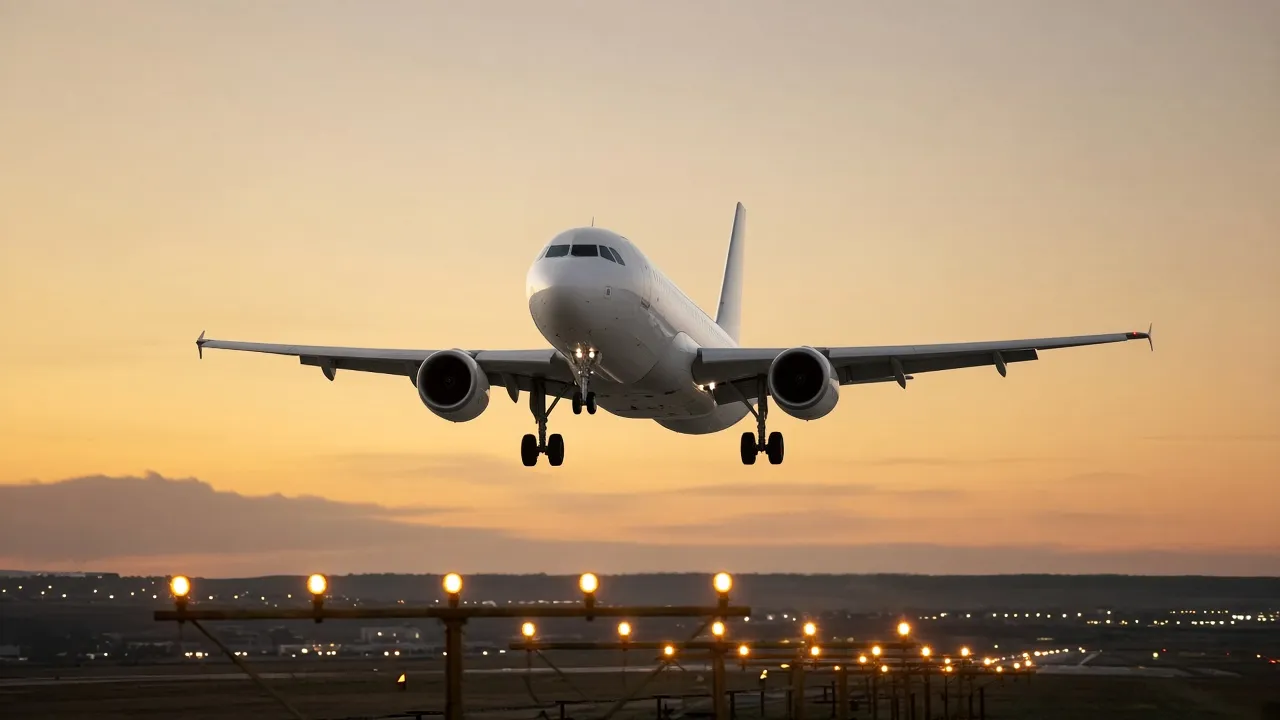
You're nearly down. You can see the runway lights, the houses look close. Then the engines roar, you're pressed into your seat, and the aircraft climbs away. For anyone with flight anxiety, it can feel like the moment something went wrong.
It isn't. That was a go-around, and it is one of the most routine, practised manoeuvres in flying. Here's what happened and why.
What a go-around is
A go-around simply means the pilots decided not to land on this approach, climbed away, and will come back for another one. The US >Federal Aviation Administration describes it as "a safe, routine maneuver" performed at the pilot's discretion or at the request of air traffic control.
Every approach we fly is briefed with a go-around already planned: the height, the heading, the altitude to climb to. We are always ready to do one. It is a decision, not an emergency.
Why pilots go around
Some of the most common reasons:
- The runway isn't clear. The aircraft ahead hasn't vacated yet, or a vehicle is still on the runway. Air traffic control may tell us to go around, or we'll decide ourselves.
- The wind changes. A gust or a shift in wind direction near the ground can make the approach less than ideal.
- The approach isn't perfectly stable. Airlines set strict criteria for speed, descent rate and alignment by a certain height. If any of them isn't met, the rule is simple: go around and try again.
- Weather. Low cloud or heavy rain may mean we can't see the runway at the decision point.
Notice something about that list? A go-around is the safety system working. It's pilots choosing the best possible landing instead of accepting a good-enough one.
What you'll feel and hear
- A sudden roar. We push the thrust levers forward to go-around thrust. It's loud and immediate.
- Pushed back in your seat, nose up. The aircraft pitches up and starts climbing, much like a take-off.
- Whirring and a thud. We retract the flaps one step and raise the landing gear. You'll hear the same rumble and thud as after take-off.
- Levelling off. We climb to a set altitude and level off. The engines quieten and it may feel like a float.
- The captain's announcement. Once the workload settles, usually a few minutes later, the pilots will often explain what happened. We're busy flying first, talking second.
- Another approach. We fly a circuit or are vectored back by air traffic control, and land.
If you fly on the A320 family, my A320 sounds and sensations guide explains the gear, flap and engine sounds you'll hear during all of this.
How well pilots know this manoeuvre
Go-arounds are part of our regular training. We practise them in the simulator, including in difficult conditions, and our skills are checked in the simulator twice a year. On the flight deck, the go-around is a well-drilled sequence of actions and callouts that both pilots know by heart.
Calming yourself during a go-around
- Remind yourself: "This is a planned option." We prepared for it before we started the approach.
- Breathe slowly: in for a count of five, out for a count of five.
- Expect the announcement, but give the pilots a few minutes to fly first.
- Watch the cabin crew. They will stay seated and calm.
The captain's bottom line
A go-around is pilots choosing safety over convenience. It feels dramatic because it's sudden and loud, but it's a practised, routine manoeuvre, and you'll be on the ground a little later than planned. For more calm explanations like this in your pocket, get my free guide.
Want this in your pocket?
Download my free illustrated PDF, Turbulence & Aircraft Sounds Explained by an Airline Captain, and take it on your next flight.
Get the free guideFrequently asked questions
Is it normal for a plane to abort a landing?
Yes. A go-around is a routine manoeuvre. The US Federal Aviation Administration describes it as safe and routine. Pilots practise it regularly and every approach is flown with a go-around already planned.
Why do pilots do a go-around?
Common reasons include the runway not being clear yet, the aircraft ahead being slow to vacate, a gusty wind or wind change, or the approach not being perfectly stable. Pilots also go around whenever air traffic control asks them to.
What does a go-around feel like?
The engines get loud quickly, you're pushed back into your seat, the nose rises and the aircraft climbs. You'll hear the gear and flaps retract. Then the aircraft levels off, flies a circuit and comes back to land.
This article is general information, not medical or professional advice. Always follow instructions from your crew. If fear of flying seriously affects your life, please speak to a doctor or qualified therapist.