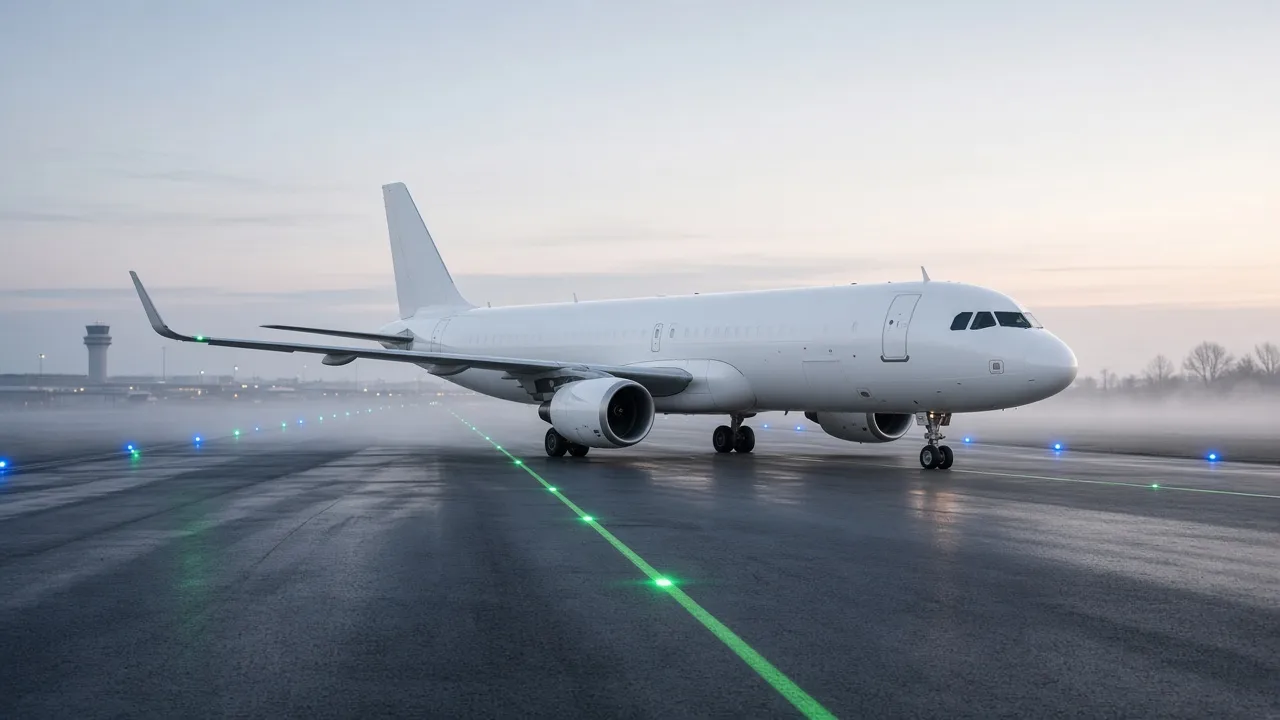
You look out of the window and see nothing but white. The aircraft keeps descending, and you wonder how the pilots can possibly find the runway. Here's how it works, and why there's always a safe option if the weather is too poor.
Flying on instruments
Airline pilots are trained to fly using instruments alone. On approach, many runways have an instrument landing system (ILS), which sends precise radio guidance to the aircraft showing whether it's left or right of the runway centreline and above or below the ideal descent path. The aircraft follows that path down.
Autoland: when the autopilot lands the plane
In low visibility, at suitably equipped airports, we can use autoland, where the autopilot flies the aircraft all the way to touchdown and keeps it on the centreline afterwards. The aircraft, the airport and the pilots must all be certified for these approaches. We practise them in the simulator, and our skills are checked there twice a year.
When autoland is in use, airports also switch on extra protections, such as keeping vehicles and other aircraft further from the runway so they don't disturb the radio signals.
The decision point
Every approach has a decision point, a set height or altitude. If we don't have what we need at that point, we don't land. We fly a go-around instead. There's no pressure to "try anyway". The rule is clear and every crew follows it.
If the fog is too thick
There are minimum visibility rules for every type of approach. If the conditions are below them, we can:
- Hold and wait for the fog to lift. See why the plane might circle.
- Divert to another airport with better weather.
Fuel for both is planned before departure.
What you'll notice
A low-visibility landing can feel very smooth, or a little firmer than usual. A firm touchdown is normal and sometimes deliberate. Read why the landing was so hard to see why. You may also taxi more slowly afterwards, because visibility on the ground is limited too.
The captain's bottom line
Fog doesn't mean guesswork. Pilots follow precise guidance, strict minimums and a clear decision point, and if the weather isn't good enough, we go around, hold or divert. For more calm explanations, get my free guide.
Want this in your pocket?
Download my free illustrated PDF, Turbulence & Aircraft Sounds Explained by an Airline Captain, and take it on your next flight.
Get the free guideFrequently asked questions
Can planes land when the pilots can't see the runway?
Pilots fly the approach using instruments and can use the autopilot to land in suitable conditions at suitably equipped airports. There are strict minimum visibility rules, and at a set point on the approach the pilots must have the required visual references or go around.
What is autoland?
Autoland is a system that lets the autopilot fly the aircraft all the way to touchdown on a suitably equipped runway. Both the aircraft and the crew must be certified for it, and pilots practise it in the simulator.
What happens if the fog is too thick to land?
The pilots don't land. They either hold, waiting for the fog to lift, or divert to another airport where the weather is better. Fuel for this is planned before departure.
This article is general information, not medical or professional advice. Always follow instructions from your crew. If fear of flying seriously affects your life, please speak to a doctor or qualified therapist.