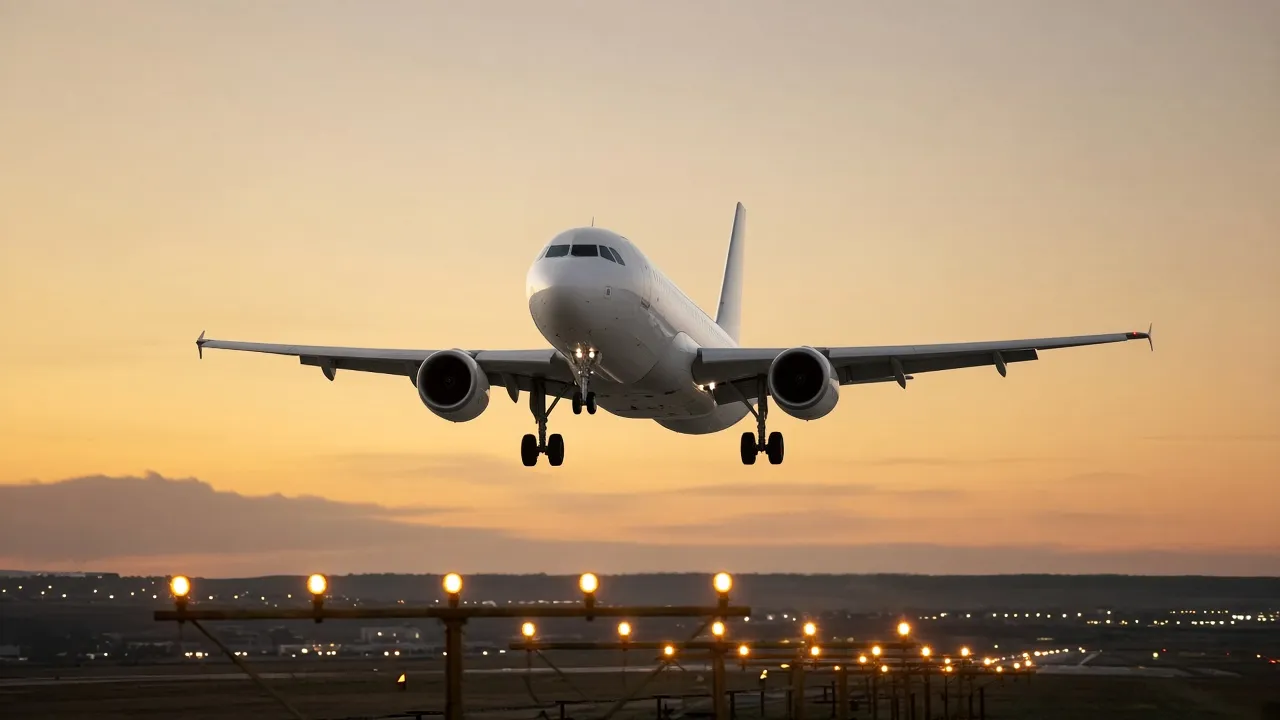
You expected to start descending to land, but the aircraft banks, then banks again, and you realise you're flying in circles. For nervous flyers, it's natural to wonder what's wrong. In most cases, the answer is simple: we're waiting our turn.
What a holding pattern is
A holding pattern is a racetrack-shaped loop flown over a fixed point at a set altitude. Air traffic control uses holding to space out arriving aircraft, a bit like a queue in the sky. Each aircraft is stacked at its own altitude, and controllers bring them down one by one.
Common reasons for holding
- A busy airport. At peak times, more aircraft arrive than the runways can take at once.
- Weather. Strong winds, low cloud or storms can slow down the arrival rate.
- A runway closure. For example, a runway inspection or a slow-moving aircraft ahead.
- Pilot request. Sometimes we ask to hold, perhaps to wait for weather to pass or to work calmly through a checklist.
"Will we run out of fuel?"
This is the most common worry, and it's covered before we even leave the gate. Every flight carries fuel for the trip, plus extra for things like holding, a possible diversion to another airport, and a final reserve. Pilots monitor fuel throughout the flight and decide well in advance when to stop holding and divert if needed.
What you'll feel
- Gentle turns. Each end of the racetrack is a turn, so you'll feel the aircraft bank every few minutes.
- Engine changes. We may slow down to save fuel, so the engines may sound quieter.
- Little else. Holding is calm, level flying.
How to stay calm
- Remind yourself: "We're in a queue, not in trouble."
- Breathe in for a count of five, out for a count of five.
- Listen for the captain's announcement. We'll often tell you how long we expect to hold.
- If the approach ends in a climb instead of a landing, that's a go-around, another planned, routine option.
The captain's bottom line
Circling is usually a queue in the sky, planned for before departure, with fuel to match. For more calm explanations of what you see and feel on board, get my free guide or join the course waitlist.
Want this in your pocket?
Download my free illustrated PDF, Turbulence & Aircraft Sounds Explained by an Airline Captain, and take it on your next flight.
Get the free guideFrequently asked questions
Why do planes circle before landing?
Usually because the airport is busy, the weather is causing delays, or the runway is temporarily closed. Air traffic control asks aircraft to fly a holding pattern, a racetrack-shaped loop, until it's their turn to land.
Will the plane run out of fuel while circling?
Fuel for possible holding and for diverting to another airport is planned before every flight, on top of the fuel needed for the trip. Pilots watch it closely, and if holding goes on too long, they divert in plenty of time.
Is circling a sign that something is wrong with the plane?
Usually not. Holding is normally about traffic or weather at the destination. If pilots need time to work through a technical issue, holding gives them a calm place to do it.
This article is general information, not medical or professional advice. Always follow instructions from your crew. If fear of flying seriously affects your life, please speak to a doctor or qualified therapist.